When AI *is* the creative process
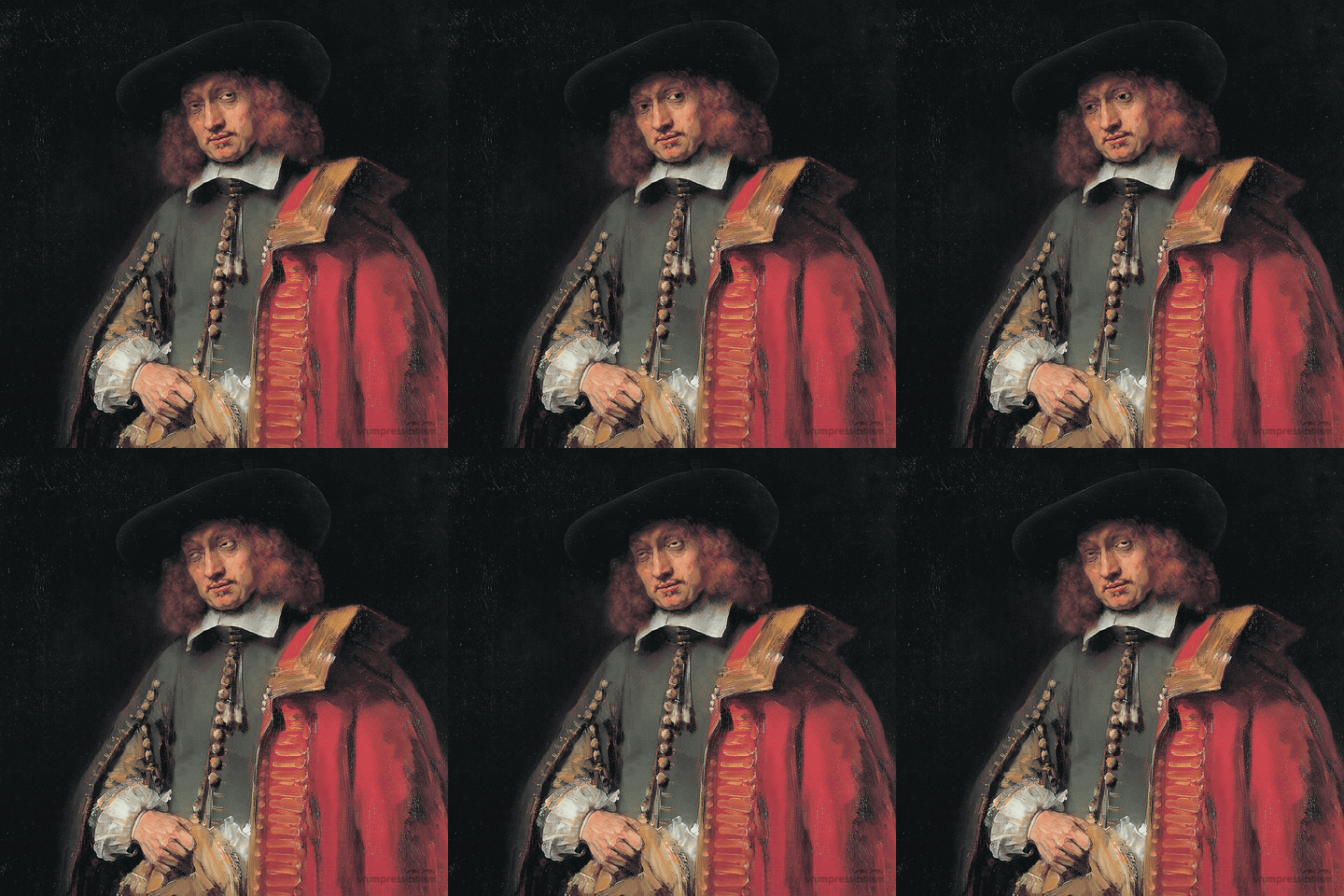
Rembrandt had over 50 assistants in his studio. He’d give them a sketch, they’d transfer it to a canvas and do much of the painting, then he’d step in to finish the job.
Alexandre Dumas, author of The Three Musketeers, ran a “novel factory,” with over 70 assistants and ghostwriters. Shakespeare shared the load on 40% of his plays.
The point here is that great artists rarely work alone. The further point is that if you’re a busy executive and you want to put your thoughts out into the world, it’s perfectly OK to let AI rough in the background before you complete the piece.
There’s no need to stare at a blank screen and be the tortured artist if you don’t want to or don’t have time to. Nobody will call you Shakespeare, sure, but that’s not your goal. You want to get your thoughts into circulation, contribute to the conversation, convey your vision.
So go for it. Put in your prompts and do your iterations and create the content you want.
Just don’t stop there. Finish your piece with a human touch. It could be yours or, if you don’t have the time, you could hire a professional skilled in the task of turning AI outputs into original, individual thought leadership.
If you don’t, you’re wasting your time. Post raw AI and platforms will ignore it. The algorithms of Google and LinkedIn are well-trained to recognize pure AI content and ghost it into oblivion.
“To be or not to be” is no longer the question. With AI, your thoughts easily can be.
But can they be seen? That is the question.
